Fingersop

Did you know we have a native custard apple relative in WA? Extreme north but totally adaptable to Perth's climate is the fingersop!
This rare fruit tree belongs to the Annonaceae family, making it a true wild cousin of the famous custard apple, soursop, and cherimoya.
In fact, Australia is home to roughly 15 genera and about 50 species of Annonaceae! Scattered across the tropical regions of Qld, NT, and WA.
Worldwide, this massive botanical family contains over 100 genera and well over 2,000 distinct species. At Primal Fruits Perth oour collect is a mere dozen of so custard apples and relatives, each year that number increases.
While most people think of creamy tropical imports when they hear the word Annona, Australia holds its own wild genetic treasure in this family. The fingersop is probably the most famous of these realitively obscure ones.
The fingersop also has a rich botanical historical background. It was originally described as Mitrephora cylindrocarpa in 1911 before being transferred to the Meiogyne genus in 1994.
Its species name comes directly from Greek, meaning "cylindrical-fruited," a testament to its unique shape. In fact in the early days it was confused with the main Aussie native fingerlime.
Native to rainforest pockets and vine thickets across northern Australia, as well as Southeast Asia, including Vietnam, Malaysia, and Papua New Guinea. The plant exists in two distinct subspecies: M. c. subsp. cylindrocarpa, which stays bushier and smaller (2-6m), and M. c. subsp. trichocarpa (10-20m), which sports a more erect, upright habit.
Despite its native status, the fingersop gained serious internet fame through rare fruit collectors in the USA.
During the mid-2000s, rare fruit enthusiasts in Florida and California imported seeds from North Queensland, desperate to find cold-tolerant Annona relatives. Goes to show, never assume cold tolerance based on natural habitat of the plant.
As pictures circulated on obscure forums, mass confusion broke out among growers who kept mistaking it for the Australian finger lime and even calling them finger lime too.
Eventually collectors coined "fingersop" to marry its long shape with its soursop-like inner flesh.
For Western Australian gardeners, it qualifies under the main local urban canopy initiative, the Treebate program. It is an absolute powerhouse choice for Broome residents looking for a tough native, but it is equally suited to Perth growers, handling winter cold surprisingly well when given a warm, sheltered spot away from heavy frost. Mine are outside in winter perfectly unaffected from the cold.
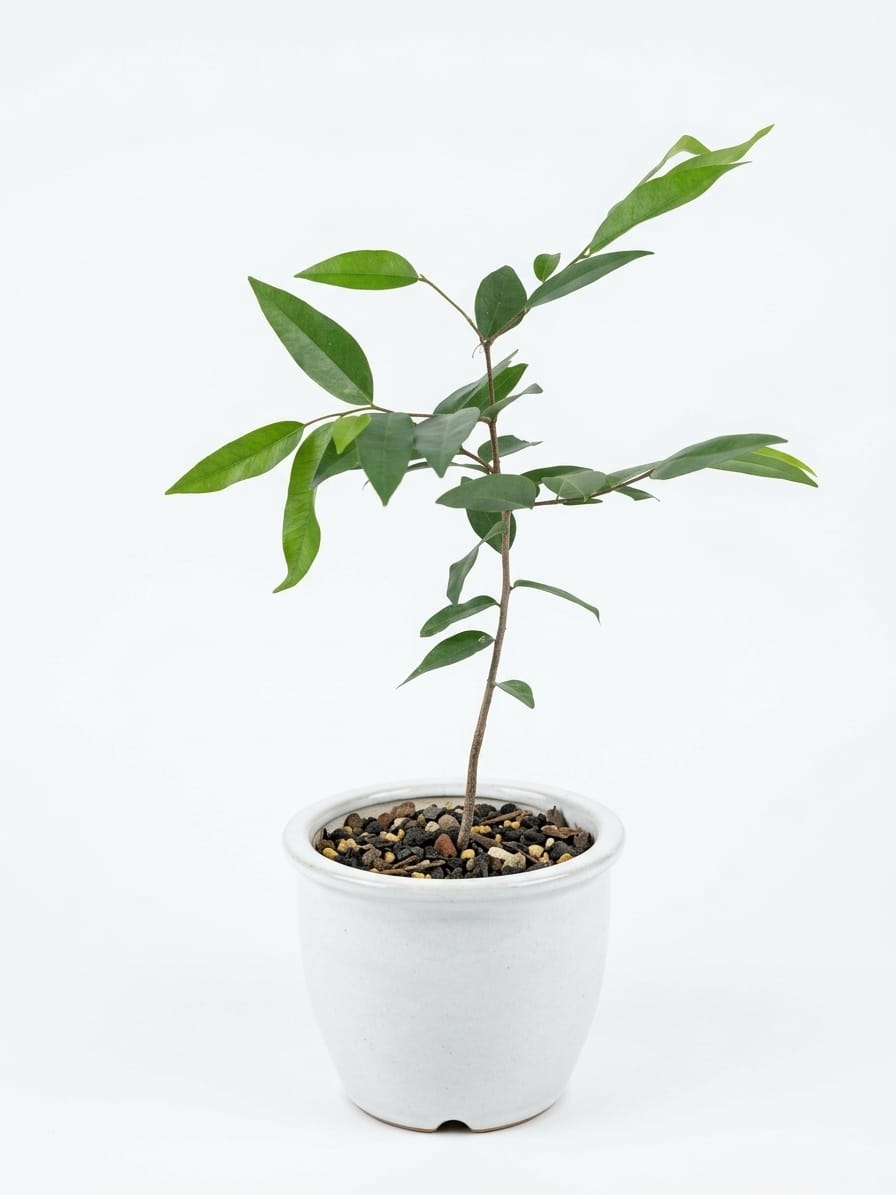
In its native rainforest canopy, Meiogyne cylindrocarpa usually reaches up to 10m (occasionally 20m), but in suburban gardens, especially way South of its natural habitat it'll stay a much more manageable compact shrub of 2-4m. The leaves are stunning. The real show starts in January to May, it grows small, creamy yellow flowers with soft, fuzzy petals.
February to November, it yields slender, bright orange to red fruits. The flavour profile is fascinatingly - while often compared to an apricot, mango, and floral custard blend, others liken the sweet, mild pulp to sapodilla or even a sweet papaya.
Fingersop has been confirmed to fruit in Perth metro.
Beyond human enjoyment, the fingersop plays a great ecological role in native habitats as a host plant for the pale green triangle butterfly (Graphium eurypylus) while its fruit attracts local fruit doves. I'm sure Perth birds will happily sample the fruits too if you aren't quick enough.
Growth is extra slow and steady. Grown from seed, germination takes anywhere from two weeks to six months due to a thick seed coat, with seedlings taking 5 to 6 years to fruit. However, grafting onto suitable rootstock significantly speeds up fruiting times while keeping the tree even more compact for tight Perth yards. This would be a future prospect though as I've never seem any available, even in QLD.
Beyond the backyard, the genus Meiogyne has sparked strong scientific and phytochemical interest. Studies on related species like Meiogyne virgata have identified rich alkaloids such as liriodenine, anonaine, and dimethyltryptamine, while the foliage contains high terpene profiles that act as natural insect deterrents and antioxidants.
Watch Weird Fruit Explorer taste test the Fingersop.