Moringa Banned?
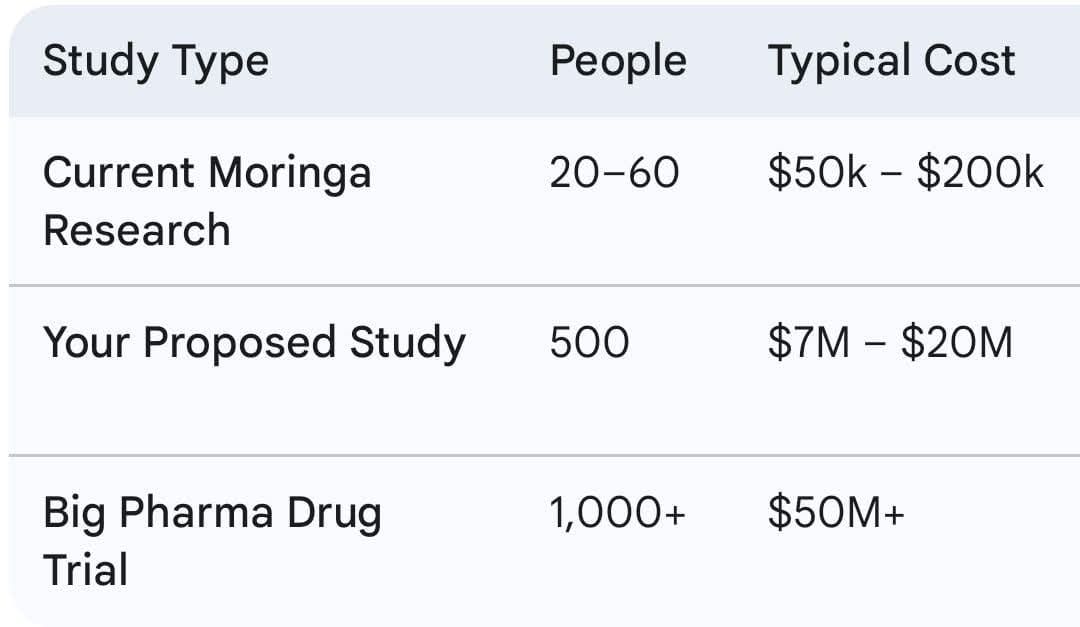
This is the craziest news in food science ever! Moringa, as a retail food item is now illegal to import into Australia AND sell. You can still plant to grow or own in Australia. The plant remains legal for cultivation, its status as a saleable food product has changed significantly. This shift follows a recent ruling by Food Standards Australia New Zealand. In April 2026, the authority rejected an application to classify Moringa oleifera as a novel food. they claim this decision was based on a lack of scientific data to guarantee its safety as a standardized food ingredient for the general population rather than a specific finding that the plant is toxic. I find this hard to swallow considering the abundance of research done and the plant has been consumed for thousands of years. Because the plant failed this safety assessment, it is now prohibited from being sold as a food or food ingredient for retail in Australia. This has immediate consequences for the supply chain. The Department of Agriculture has updated its protocols to reflect this change, meaning any imported moringa products like powders, capsules, or teas labeled for human consumption will be seized or destroyed at the border. Businesses that previously sold moringa as a health supplement now face major legal hurdles because it is technically a non-permitted food ingredient. Despite these commercial restrictions, the tree itself is not a prohibited weed or a controlled substance. Australians are still perfectly free to grow moringa in their backyards. There are no laws preventing individuals from eating leaves from their own trees or using the plant privately. Furthermore, the ruling does not apply to non-human uses. Moringa can still be sold for animal forage, biofuel research, or as an active ingredient in specific contexts recognized by the Therapeutic Goods Administration. This regulatory outcome creates a divide between private hobbyists and commercial enterprises. For those involved in rare fruit cultivation or food forests, the plant remains a viable and legal option for personal use. However, for the commercial superfood market, the path forward is effectively blocked until further scientific evidence can satisfy food safety standards. It is a case of the law catching up with a lack of data, resulting in a ban on sales rather than a ban on the species itself. In fact, there are thousands of papers on Moringa, most human clinical trials are actually quite small, usually involving fewer than 100 people. The largest individual human study often cited in research reviews involved 60 participants with type 2 diabetes. This study lasted three months and looked at how Moringa leaf powder affected blood sugar levels.
Because individual trials are so small, scientists often use Meta-Analyses to get the big picture. These are studies that combine results from many smaller trials to act like one giant study. Recent examples include: 2026 Meta-Analysis: This review analysed 20 clinical studies focused on metabolic diseases like high blood sugar and blood pressure. Even the 2025 Umbrella Review: This is one of the broadest looks at the plant, covering 26 systematic reviews at once. It looked at how Moringa affects inflammation, cancer, and heart health. I can go on, 2023 Comprehensive Review: This analyzed data from over 100 different papers, including 25 clinical trials, to summarise its impact on malnutrition and even HIV. Why aren't there any single bigger studies?
Most Moringa research happens in university settings or small clinics in places like India (the world's largest producer) and Africa. Large-scale trials with thousands of people are very expensive and are usually funded by big pharmaceutical companies for new drugs, rather than for a plant that anyone can grow in their backyard. Even without a single massive trial, the combined evidence from hundreds of smaller studies shows it is a safe, nutrient-dense food that can help lower blood sugar and improve nutrition. Then Why did Australia ban this miracle food?
According to the ruling the FSANZ was not a declaration that the plant is "toxic." Instead, the regulator applied the Precautionary Principle. To approve a "Novel Food," they require "gold standard" data—specifically, long-term, large-scale human trials that prove safety across all age groups and health conditions. Since the application (A1294) relied on smaller, varied international studies rather than one massive, standardised Australian safety trial, FSANZ concluded the evidence was inconclusive for a general retail rollout. Moringa is new and emerging still in Australia. Of course there's never been an Aussie study of around 500 Aussies for 12 weeks. Who wants to change this?
Part III on Moringa in Australia The Australian moringa market was a fast growing sector, before the ban, called at $90m. Most of this value comes from health supplements like powders and capsules rather than fresh food. Experts think the market would have grown by about 10 percent every year as more people look for natural ways to stay healthy. Before the April ban a lot of the moringa sold in Australia was brought in from overseas, but there was a big push to grow more of it locally. Last month government groups wanted to see Aussie grown moringa reach a value of $10m until the ban stopped any hope. Moringa juice is a specific part of the market worth over $8m. While medicine and supplements are the biggest sellers, the use of moringa in cooking and skincare is catching up quickly. Skincare is still legal. Moringa oil is becoming a hit for skin products because it stays fresh for a long time. The market for fresh pods and leaves was still small because of food rules, but it would have jumped up if those rules changed. Unfortunately it went the other way. Now emerging growers have to look at using the plant for cosmetics, animal feed and garden tonics which adds extra value to the industry. In 5 years the Moringa industry was set to be a $200m a year industry in Australia. Now decimated unnecessarily.
Food Standards Australia New Zealand you have made a grave mistake banning Moringa as human food in our region. There's documented evidence Moringa has been consumed for over 100 years in Australia, many generations. It's not a novel food item at all. In fact, globally Moringa has been a staple for 5000 years in Egyptian and ancient India followed by the entire Greek and Roman empires. Moringa has been extensively studied. Over 10,000 studies mention this superfood. Many organisations have already done many meta analysis, systematic and umbrella reviews to determine safety of Moringa as a food. Stohs and Hartman, being one of most famous in 2015, looked at about 150 different sources to get the full picture on Moringa safety. Because it was a big review, they did not just look at one thing. They split the studies into groups: Human studies: They looked at around 10 trials where people actually ate the leaf powder. Animal studies: They checked a large number of tests on rats and mice to see how much they could eat before it caused any trouble. Safety tests: They looked at many lab tests on cells to see if the plant caused any negative effects. By checking so many sources at once, they were able to say for sure that the leaves are very safe for people to eat. It is one of the most trusted papers because it checked over a hundred different pieces of evidence. Why didn't FSANZ follow this? By suddenly banning its many culinary uses in 2 countries you have stopped a significant industry from flourishing. Set to bring $200 million to the Aussie/NZ economies by 2030 and wrecking havoc to the well-being of so many. I find it incredible that one application quoting just one study would cause this sudden change in direction and affect everyone else. What happened to the 2024 application from Agrifutures Australia? "The project research clearly showed that M. oleifera is a safe and nutritious food source, suitable for human consumption." The outcome was anticipated by September 2024. What happened? (See comments for ruling) "Achieving this milestone will have profound and positive impacts on the Australian and New Zealand Moringa industries". https://agrifutures.com.au/product/amendment-of-the-australia-new-zealand-food-standards-code-to-permit-the-sale-of-moringa-oleifera-as-food/?hl=en-US#:~:text=The%20project%20research%20clearly%20showed,and%20New%20Zealand%20Moringa%20industries. Listen to these leaders 1. AgriFutures Australia: Led the 2024 FSANZ application to prove food safety. 2. NT Government: Ran large crop trials showing it is a safe local plant. 3. Moringa Project Inc: Shared data on safe use in local communities. 4. Forest Super Foods: Campaigned for food status while transitioning sales to TGA-listed medicine to maintain access. 5. WA DPIRD: Helped nurseries get ready for large scale food production.