Perth's Subtropical Fruit Shift
The winter chill in Perth is fading fast.
Look closely at the weather data over the last few decades and you will see a story that every backyard gardener and commercial orchardist needs to pay attention to.
Do we even have half a decade left before the classic winter cold snap becomes a rare memory? As global temperatures nudge our local climate up, traditional temperate fruit trees like apples, sweet cherries, and low to medium chill stone fruits are waking up confused.
These trees rely on 300+ winter hours spent under 7c to reset their internal biological clock. Without that sustained cold snap, their flower buds end up sleeping right through spring, blooming in an uneven mess, or falling off the branch entirely. That leaves your fruit bowl nearly bare when harvest time comes around. If you are clinging to old school temperate fruit on the Swan Coastal Plain, the climate math is simply stacking against you.
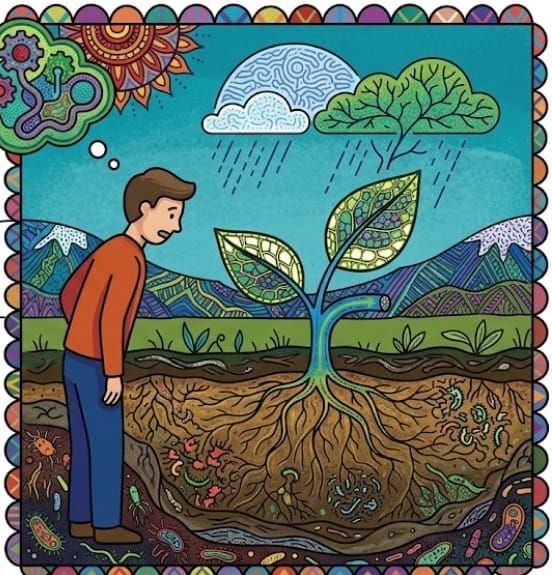
To understand why this is happening, we have to look at the plant science behind winter dormancy. Temperate fruit trees enter a state called endodormancy in late autumn. This is a survival strategy designed to protect soft growing tissue from freezing winter temperatures. During endodormancy, growth inhibitors like abscisic acid build up inside the flower buds, halting cellular division. The tree will not wake up until it experiences a specific cumulative amount of cold weather, measured in chill hours or chill portions. Once that physiological cold threshold is met, the tree breaks down abscisic acid and produces growth promoters like gibberellins. This shift tells the tree that winter has passed and it is safe to bloom.
When winter temperatures stay too warm (forecast in 2026), the tree fails to clear those growth inhibitors. The result is protracted foliation and irregular flowering. Some branches on the same tree might flower in September while others sit bare until November. Fruit set becomes patchy, yield drops off a cliff, and the tree wastes precious energy trying to decide what season it is. On the Swan Coastal Plain, winter minimums are steadily climbing. Urban development, thermal mass from concrete, and changing atmospheric patterns are all reducing the number of cold nights we get each year.
The Perth coastal plain usually gets under 200 to 300 chill hours a year.
For this winter in 2026, DPIRD and BoM weather outlooks point to higher than average winter temperatures. That means total chill hours across the plain will likely land near the bottom end, around 150 to 220 hours.
Low-chill fruit trees needing under 150 hours will scrape through, but standard stone fruit won't get enough cold nights to break dormancy properly.
Science offers a few alternative hypotheses about what might happen next, each with its own level of likelihood.
Not everyone agrees what the future holds.
However scientific consensus, over 99.9% of peer-reviewed climate papers agree that humans are the main driver of global warming and global warming is a real thing. A 2021 Cornell super-study of 88,000 papers found near-unanimous consensus. Surveys of active climate scientists show 97 to 100 percent agreement on all points.
This doesn't stop some Australian groups opposing sensible climate policy: One Nation and similar groups say net-zero targets raise power costs, shut coal plants, and hurt manufacturing and farming. They see fossil fuels as vital for cheap energy and self-reliance. But to what overall cost?
In mining, farming, and industrial areas, climate policy is seen as a threat to jobs and land. Large wind and solar farms are often opposed for taking up prime agricultural land.
These groups also distrust mainstream institutions, the UN, and the IPCC. They see international pacts like the Paris Agreement as threats to Australian sovereignty.
They argue temperature records are unreliable, warming is natural, or IPCC models are exaggerated. They say current evidence does not justify major policy shifts.
But what can we do about fruit tree selection and growing at home and on farms? in serious debates the first hypothesis is that traditional temperate fruit trees will adapt through management techniques or low chill breeding. Scientists and growers can use chemical breaking agents, like hydrogen cyanamide, or strategic water stress and artificial defoliation to force trees out of dormancy without cold weather. You know, more human manipulation. Knowing these techniques is a good thing as this gives you, the gardener, choices, but systematic unnatural processes forcing trees to push against nature is, on the whole, not great.
Plant breeders are also developing ultra low chill varieties of stone fruit that require fewer than one hundred chill hours. The likelihood of this solution saving traditional temperate fruit growing in Perth is moderate for dedicated commercial growers, but low for backyard gardeners. Chemical breaking agents are costly, require precise timing, and carry environmental toxicity risks. Ultra low chill apples and peaches exist, but they often struggle with our brutal, scorching summer heatwaves later in the season.
A second hypothesis suggests that climate cycles like the Pacific Decadal Oscillation and El Nino Southern Oscillation will cause enough year to year temperature swings that cold winters will return periodically. In this scenario, temperate fruit trees might yield decently every three or four years during anomaly cold spells. The likelihood of this hypothesis holding up as a long term strategy is very low. While natural weather cycles do create cold winters occasionally, the baseline temperature trend is moving relentlessly upward. Relying on an occasional cold winter means orchardists face financial loss in majority of years, making temperate fruit growing economically non viable even over the short term ten year horizon.
A third hypothesis is that summer heat, rather than winter chill loss, will become the primary limiting factor for fruit production in Perth. As winter warms up, summer extremes are also intensifying. Temperate species are vulnerable to sunburn, photoinhibition, and excessive transpiration stress when temperatures cross 38c. The likelihood of this hypothesis is extremely high. Even if a low chill stone fruit tree manages to set fruit during a mild spring, a series of scorching 40+c summer days can cook the fruit on the branch, defoliate the tree, and shut down photosynthesis entirely.
Now let us turn to the sweet side of a warmer Perth backyard or syntropical smal scale farm. Fewer severe cold snaps and milder winter soil temperatures mean Perth is turning into a subtropical playground. Our sandy soils might lack clay, but they drain fast, and our winter air rarely drops low enough to damage subtropical tissue. Shaded microclimates are the real secret weapon here. While the blazing summer sun can scorch tender tropical leaves, a protective tree canopy creates a microclimate that blocks harsh ultraviolet radiation during summer while trapping radiant ground heat during cool winter nights.
When you shift your focus from struggling cold climate crops to subtropical performers, your options burst wide open. So too, economic opportunities.
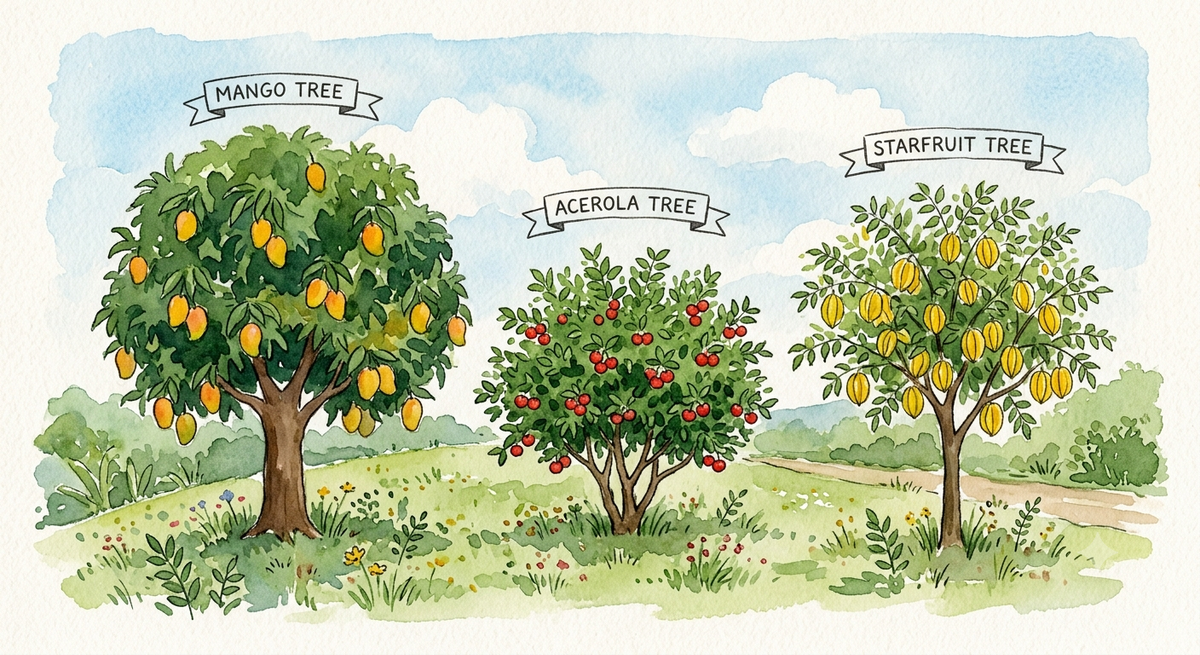
Shaded microclimates allow you to ditch the struggling stone fruit and step into growing lush mangoes, starfruit, bananas, jaboticabas, cherry like eugenias, and large fruiting sapotes - to name a very few. Your yard turns into a tropical paradise where trees produce heaps of fruit without ever needing a freezing winter alarm clock.
Mangoes thrive in Perth once established, provided they get summer water and protection from harsh coastal winds while young. Starfruit, or carambola, thrives in shaded understorey positions where humidity stays higher than the surrounding dry air. Bananas love the warmer winter soils, pushing out steady growth through months that used to stall them out. Jaboticabas, with their thick trunks covered in juicy dark purple berries, adore filtered light and consistent moisture. Eugenias, including pitangatuba, grumichama, and cedar bay cherry, provide high antioxidant berries with minimal effort. Canistel and mamey sapote produce rich, custard like fruit that feels utterly decadent, all while enjoying our frost free winters.
This climate transition is not just something for backyard gardeners to enjoy. Farmers and state government bodies ought to wake up to this shift and embrace it as a massive economic and ecological opportunity.
Commercial agriculture in Western Australia has historically relied on fixed regional zoning, assuming temperate fruit belongs in the south west and tropical fruit belongs up north in Carnarvon or Kununurra. But as climate zones drift southward, the Perth peri urban fringe (the outer edge of the metropolitan area where the suburbs meet rural land, agriculture and native bushland) and the Swan Valley are sitting in a sweet spot.
Commercial growers who cling exclusively to high chill stone fruit or traditional apple orchards are fighting an uphill battle against rising energy costs for misting, shade cloth, and chemical chill breakers. By transitioning a portion of their acreage toward high value subtropical crops, local farmers can tap into a booming local market for fresh, tree-ripened tropical fruit that does not need to be freighted 2000km down the highway. Having said this, the 5% remaining stonefruit growers will be catring to a niche market and commanding premium pricing. The transition to a new norm will be rough and damaging to the many others... unless they adapt.
Subtropical trees generally require less winter chill infrastructure and can be far more resilient to changing rainfall patterns when integrated into multi strata agroforestry systems. (syntropic)
Mangoes and sapotes have deep root structures that tap into deeper soil layers, holding ground stability better than shallow rooted temperate trees. Furthermore, growing subtropical fruit locally reduces the carbon footprint associated with long distance refrigerated transport from northern WA or Queensland, offering better food security for the Perth metropolitan area.
Government agencies, urban planners, and local councils have an even bigger role to play by integrating subtropical food forestry into urban design through green corridors.
Urban heat islands are a severe issue across Perth. Subdivisions with minimal tree canopy like in Ellenbrook, sprawling asphalt, and dark rooftops retain immense amounts of heat. Traditional temperate shade trees drop their leaves in winter, leaving ground exposed, and many struggle to maintain thick foliage during our intense forty degree summer spikes. Subtropical evergreen trees, on the other hand, maintain dense green canopies year round. They transpire large volumes of water during summer, creating an evaporative cooling effect that can drop local street temperatures globally by 5c and pockets under shade by as much as 15c less.
Imagine local councils designing urban green corridors packed with edible subtropical species rather than purely ornamental trees. Streetscapes, public parks, and drainage basins could be planted with mulberry, African plum, ice cream beans, and carob trees. These green corridors act as ecological highways for native birdlife, pollinators, and beneficial insects, while simultaneously absorbing urban runoff and recharging groundwater supplies through improved soil structure.
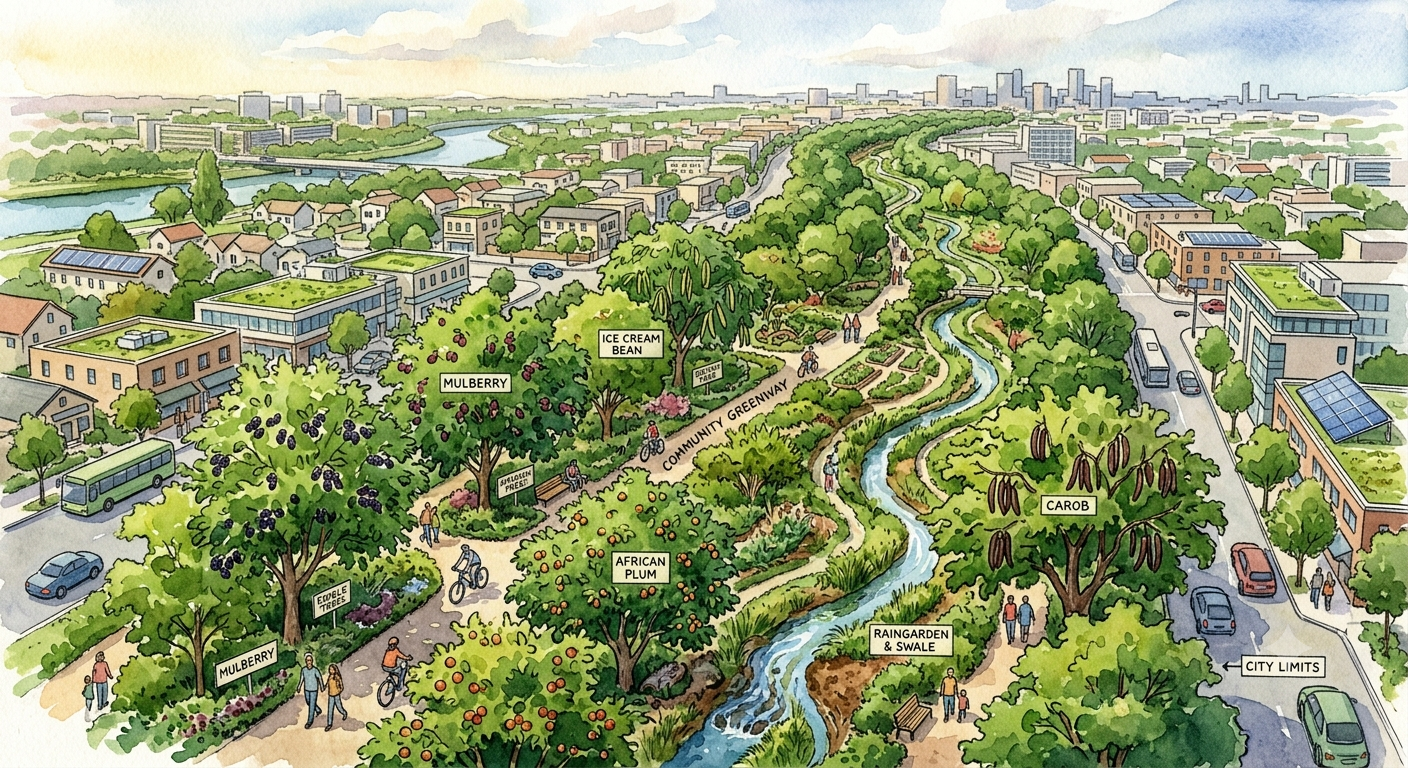
Subtropical plants thrive when grown together in layered syntropic systems. The tall pioneer trees provide canopy shade and organic matter through regular chop and drop pruning. The mid storey fruiting trees like mangoes and sapotes catch filtered sunlight. The lower understorey species like jaboticabas and shade loving berries flourish in the humid, protected zone created beneath. This multi tier canopy mimics a natural forest floor, retaining moisture in Perth sandy soils and reducing the need for constant reticulation. Im fact, such a natural system draws 75% less water than a traditional garden with lawn.
When local government invests in green corridors especially partially edible, they build suburban resilience. They create public cooling zones, reduce storm water infrastructure costs, and provide free, nutritious food for local communities. Instead of fighting against the warming climate by trying to keep old systems on life support, we can use the warmth to build a lush, productive, and biologically diverse urban landscape.
For the everyday home gardener looking to make this paradigm shift in their own backyard, starting is surprisingly simple. You do not need to tear out your entire garden in a weekend or spend thousands of dollars on complex setups. The key is working with your existing microclimates and choosing the right plants for the right spots.
Look at your block and observe where the sun hits during the hottest parts of a January afternoon. Areas protected by tall fences, north facing house walls, or the shade of a hardy evergreen tree are your prime target zones for subtropical plantings. These zones stay warmer in winter because the structures absorb heat during the day and radiate it back out at night. In summer, the shade prevents tender young leaves from crisping in the hot easterly winds.
Soil preparation is your next step. Perth sand is notoriously lifeless and hydrophobic, which tropical and subtropical trees hate. Before planting, dig in plenty of rich organic matter, clay, and compost to build up water retention and support beneficial soil fungi. Mycorrhizal networks thrive in undisturbed, organic rich soils, helping subtropical roots draw up nutrients and stay hydrated even when surface temperatures skyrocket. Cover the soil with a thick layer of coarse woodchip mulch to keep root zones cool and damp.
Start by picking two or three of your absolute favourite fruits to plant first. If you love sweet, creamy flavours, plant a white sapote or a dwarf mango variety. If you want quick wins and beautiful dark berries for the kids, put in a couple of cherry guavas or eugenias along a shady fence line. If you want fast growth and instant tropical vibes, set up a small banana colony in a sheltered corner that gets plenty of summer water.
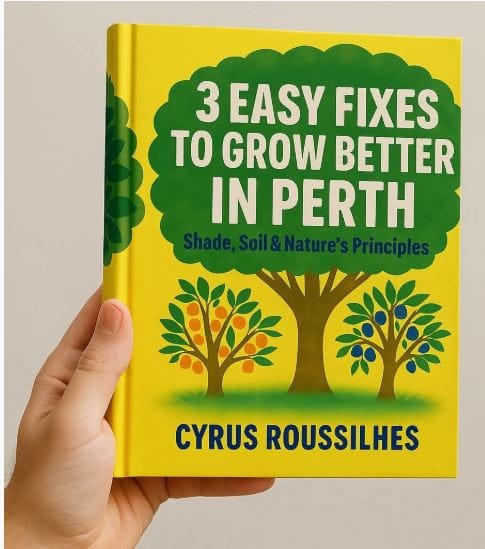
If you ever feel totally clueless or overwhelmed by choices, you do not have to figure it all out by trial and error. I wrote two practical handbooks specifically for our unique local conditions: 3 Easy Fixes to Grow Better in Perth and Cost of Living Gardening Book. They break down soil building, watering strategies, and plant selection without any complicated jargon. You can also book me for a one-on-one consult where we walk through your specific block to design a custom layout that works with your sun patterns and soil type.
You are always welcome to swing by the nursery and wander through my display garden in Parkwood. Seeing mature, healthy subtropical trees thriving right here in Perth sand gives you a clear picture of what is possible in your own space. I always love having a yarn and giving free advice to anyone who pops in for a visit, so come on past, check out the microclimates in action, and start turning this warming climate into your very own backyard paradise.