Pond Apple - The Banned Fruit Tree
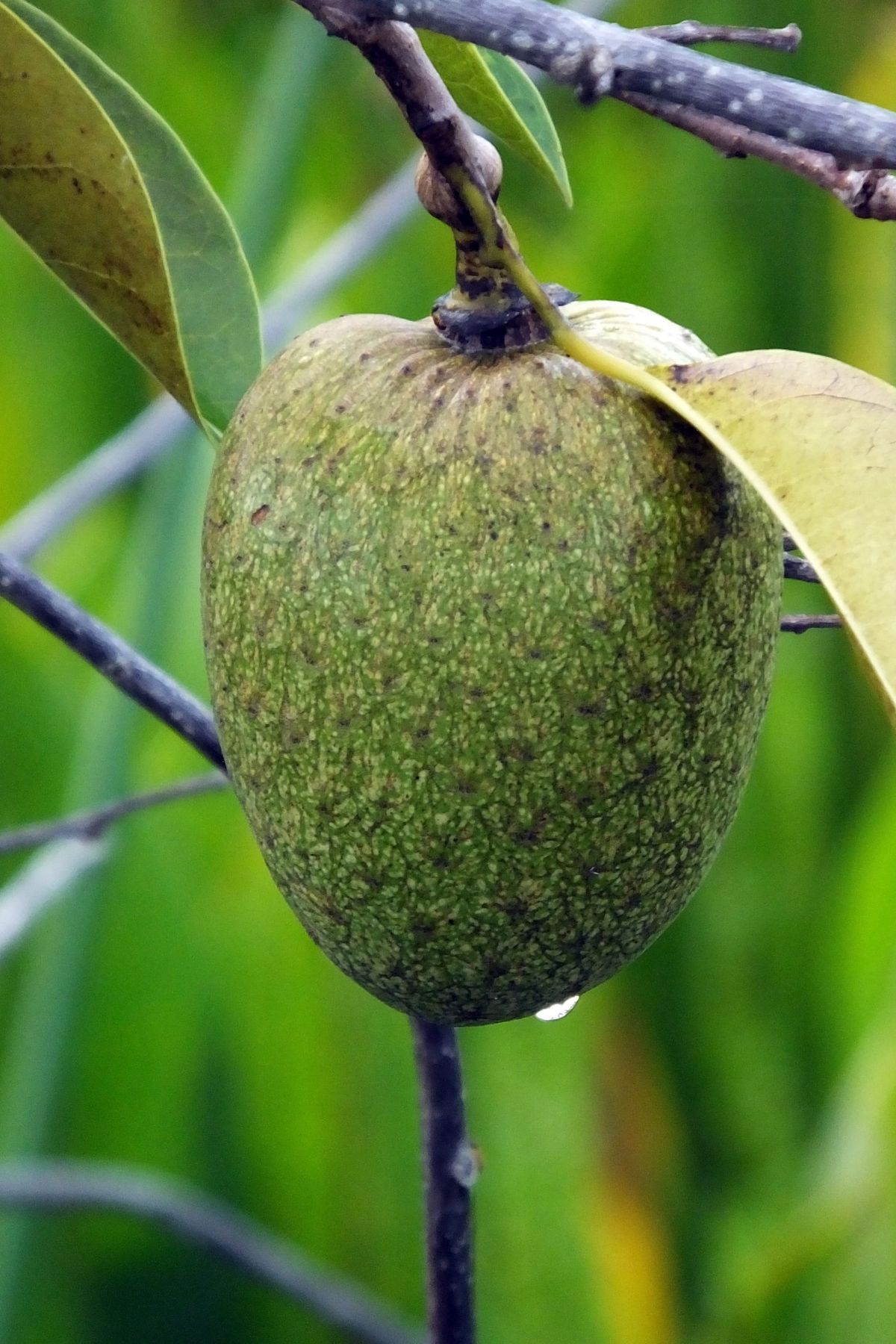
The Pond Apple is in the Annona genus, the custard apple group. Also called Alligator Apple, Monkey Apple, Corkwood in other parts of the world.
It's entirely banned in WA, even though the East sent many hundreds of thousands to us in the form of custard apple rootstock in the past.
Pond apple is a tough, mostly uncultivated wild relative of the custard apple. It originates from the tropical wetlands of Florida, the Caribbean, Central America, northern South America, and West Africa. It gets around, that should tell you something about it's invasiveness and adaptability.
The tree gets its common name because it grows straight out of swamps, brackish streams, and flooded coastal ponds. It anchors its root system directly into deep mud just like a mangrove tree.
When left to its own devices, pond apple grows into a small to medium tree that responds well to pruning, keeping it easily manageable between 3-6m tall. It thrives across a massive pH range from acid soils at 5.5 right through to alkaline coastal sands at 8, soaking up full sun or partial shade without missing a beat.
If kept in a container, it needs at least a 100 L pot by year five, though it prefers open ground where its aggressive roots can spread.
Seedlings grow at a blistering pace, often setting their first fruit in just 2-3 years.
Because of its total immunity to wet feet, pond apple was traditionally used across tropical and subtropical Australia as the go-to rootstock for commercial custard apples. Grafting superior cultivars onto pond apple allowed growers to plant orchards in heavy, waterlogged soils that would normally rot standard custard apple roots in a single season.
However, that extreme hardiness proved to be its downfall. The tree is so resilient and easy to spread via waterborne seeds that it escaped into northern Australian waterways, choking out native mangroves and paperbark swamps. Because it poses such a massive threat to delicate wetland ecosystems, pond apple is designated a Weed of National Significance and is strictly banned across all of WA and all states even Tasmania. Importing, growing, selling, or moving any part of this plant is completely illegal.
Currently there doesn't appear to be any wild rampant populations invading WA.
Queensland is the main hotspot where pond apple has gone properly wild, taking over more than 2000 hectares of the wet tropical north from Ingham to Cooktown and smothering native swamps like the cane toads. Up in the Northern Territory, a few small sneaky outbreaks near Darwin, but local weed crews hunt them down fast to stop them from spreading. Both states treat this tricky tree like a total pest.
Climate-wise, pond apple handles scorching heat, heavy humidity, and salty soil without flinching. While it loves tropical warmth, mature trees can push through brief light frosts down to -2c degrees, though extended cold snaps will cause heavy leaf drop and branch dieback.
The fruit looks like a smooth, yellow, heart-shaped custard apple, but the fresh eating quality is subpar.
The orange flesh inside is dry, can be resinous, and musky with an astringent kick that makes it far inferior to a sweet sugar apple or custard apple.
Despite that, it holds genuine value in places like Vietnam and the Caribbean, where locals blend the pulp with milk and ice, boil it down into jams, or ferment it into wine.
In Vietnamese, the pond apple is called bình bát (or cây bình bát for the tree).
In the Mekong Delta region, it is commonly used to make sinh tố bình bát, a popular iced smoothie made by scraping out the yellowish pulp, mashing it with ice, sugar, and condensed milk to balance its resinous and sour taste.
Beyond the kitchen, pond apple packs serious medicinal importance.
Traditional healers have long used crushed seed extracts as a powerful natural insecticide to wipe out lice and garden pests.
Modern scientific research has also uncovered potent cytotoxic compounds called acetogenins in the bark, leaves, and seeds, which show strong anti-cancer properties in lab studies by cutting off energy production in tumor cells.
Decoctions made from the bark and leaves are also used traditionally to kill internal parasites, soothe fevers, and treat skin infections due to their heavy antimicrobial activity.
Propagating pond apple is almost too easy, which is why it becomes a weed so fast. Fresh seeds germinate quickly in warm soil, and semi-hardwood cuttings strike roots with almost no effort in humid conditions.
It remains an incredible piece of botanical history, but its weed status means it stays firmly off the list for growers.
Gardeners and commercial growers today may inadvertently still have pond apple growing from rootstock. The winding down started in Australia in the 1990s and the last pond apple rootstock flew off to customers as late as early 2000s. So if you have a custard apple that is more than 25 years old you too could still have pond apple on your property.