Probiobics and Fermenting Drinks at Home
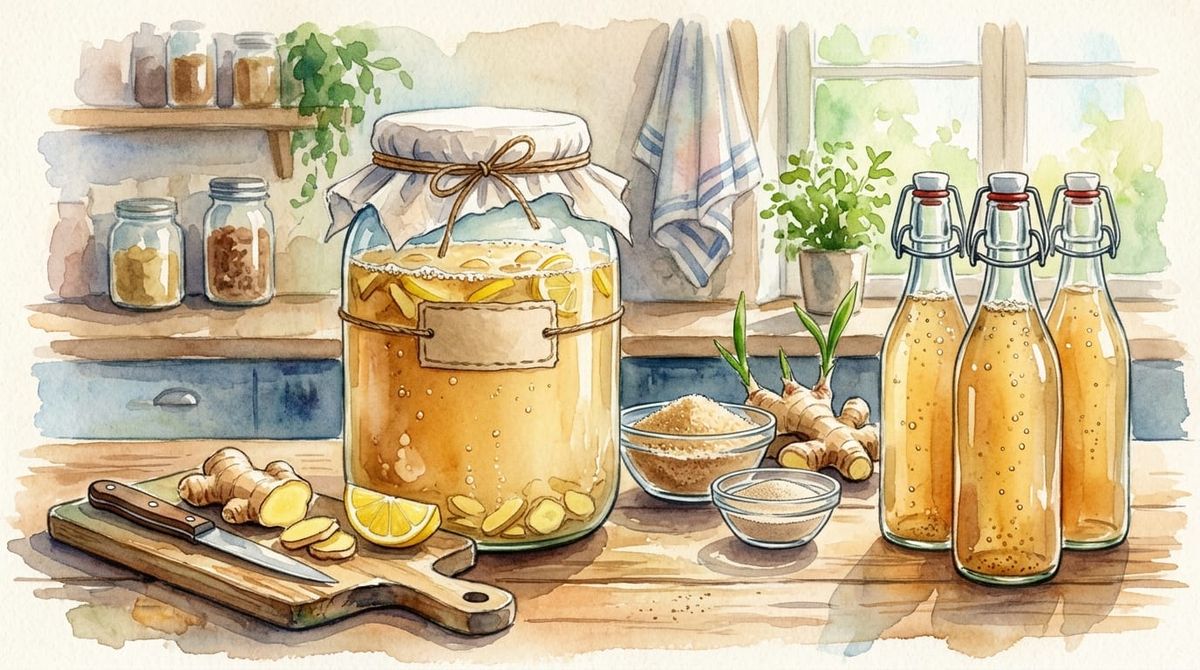
Store-bought kombucha and craft sodas come pricey from the shops, but humans have been bubbling up living, naturally effervescent drinks in simple glass jars for centuries using nothing more than wild yeasts and beneficial bacteria.
Understanding home fermentation opens up an entire world of naturally fizzy, gut-friendly tonics that go far beyond standard supermarket options.
The Power of the Ginger Bug
Traditional ginger beer does not rely on commercial powder kits or synthetic carbonation. Instead, it starts with a "ginger bug"—a living starter culture created by feeding raw ginger and sugar to water until wild yeasts naturally multiply. Over three to five days, this mixture turns into an active, bubbly liquid capable of carbonating almost any natural juice or tea base.
A standard two-litre batch of wild-fermented ginger beer costs less than two dollars to make. Because wild yeasts consume the sugars and convert them into carbon dioxide and ethanol, traditional ferments naturally carry a mild alcohol content, usually between 0.5% and 1.5% ABV. For those wanting a stronger brew, shifting from a simple jar to a carboy fitted with an airlock allows champagne yeasts to ferment higher sugar bases into a full-strength alcoholic ginger beer.
Making fresh ginger beer at home is a simple way to replace pricey store-bought soft drinks. Instead you can make better tasting and healthier naturally fermented drinks full of real ginger heat. Traditional fermentation relies on a living culture of wild yeast and beneficial bacteria to build fizz, giving you personalised control over the ingredients, sweetness, and strength. Store-bought craft ginger beer often costs around $4-8 per bottle. Apart from time, savings are massive. A home-brewed batch requires basic ingredients like fresh ginger, tap water, white sugar, and lemons. Brewed at home, a two-litre batch costs less than $2 to make. In fermentation and baking, a bug is a wild starter culture. You make a ginger bug by feeding raw ginger and sugar to water until wild yeasts and beneficial bacteria multiply into a bubbly liquid that carbonates natural sodas. Any time yeast feeds on sugar during fermentation, it produces carbon dioxide gas and ethanol. Wild-fermented ginger beer made with a ginger bug naturally contains a small amount of alcohol, typically sitting between 0.5% and 1.5% ABV depending on room temperature and fermentation time. Because of this natural alcohol creation, wild-fermented ginger beer is not entirely alcohol-free. Similar to Kombucha and half a dozen other fermented drinks made by all sorts of people around the world. Ginger Beer Brewing Without a Kit (Traditional Ginger Bug) Build the Ginger Bug: Mix two cups of water, one tablespoon of finely chopped ginger, and one tablespoon of sugar in a jar. Cover it with a cloth and feed it daily with one teaspoon of chopped ginger and one teaspoon of sugar for three to five days until it starts bubbling. Brew the Ginger Tea Base: Slice 100 grams of fresh ginger and simmer it in two litres of water with one cup of sugar for fifteen minutes. Remove the pot from the heat, stir in the juice of two lemons, and let the mixture cool completely to room temperature. Combine and Strain: Strain the liquid from your active ginger bug directly into the cooled ginger tea base and stir thoroughly. Bottle for Fizz: Pour the liquid into plastic soft drink bottles or heavy swing-top glass bottles, leaving three centimetres of space at the top. Seal the bottles and let them sit at room temperature for one to three days until carbonated. Chill to Serve: Move the bottles to the fridge once they feel firm to stop further fermentation, then serve chilled over ice. Method 2: Brewing With a Homebrew Kit (Higher Alcohol) Sanitise Equipment: Clean and sanitise a food-grade fermenting bucket, airlock, and mixing spoon using brewing sanitiser. Mix the Wort: Dissolve a commercial ginger beer extract kit and one kilogram of brewing sugar or dextrose into two litres of boiling water inside the fermenter. Top up the vessel with cold water to the twenty-litre mark. Pitch the Yeast: Check that the liquid temperature is below 25°C, then sprinkle the packet of commercial ale yeast or champagne yeast over the top. Primary Fermentation: Seal the fermenter with an airlock and let it ferment for seven to ten days until bubbling stops completely. Bottle and Prime: Syphon the liquid into sanitised bottles, add one carbonation drop or half a teaspoon of sugar per bottle, seal tightly, and store at room temperature for two weeks before chilling. Alternatively, you could make an alcoholic batch from scratch to brew a high-alcohol ginger beer without a commercial kit, starting by boiling 200 grams of ginger and one kilogram of sugar in four litres of water. Cool the mixture to room temperature, stir in the juice of four lemons, and pour it into a carboy fitted with an airlock. A carboy fitted with an airlock is a classic homebrewing setup used to ferment liquids safely without exploding the container or contaminating the brew.
A carboy is a large, narrow-necked jug made of thick glass or food-grade plastic, typically holding anywhere from 4 to 23 litres. It holds the liquid while yeast converts sugars into carbon dioxide gas and ethanol. Pitch a packet of champagne yeast instead of a ginger bug, as commercial yeast tolerates higher alcohol levels. Allow the mixture to ferment fully for two weeks until all sugar is consumed, then bottle with a small amount of priming sugar to carbonate safely. Flavour additions are easy to add. You can customize your brew by adding herbal or fruity twists during the boiling phase: Lemon Myrtle: Adding five to ten fresh or dried lemon myrtle leaves to the boiling ginger tea introduces a bright, citrus-herbal aroma that pairs naturally with ginger. Spices: Simmering two cinnamon quills, three whole cloves, or a star anise pod alongside the ginger adds warm spice complexity to the finished drink. Fruit Infusions: Stirring in fresh lime juice, passionfruit pulp, or pineapple juice before bottling provides extra sweetness and vibrant tropical flavor. Health Warnings and Safety Disclaimers Fermentation builds extreme gas pressure. Use plastic soft drink bottles to monitor pressure easily by touch, or stick to thick, pressure-rated swing-top bottles. Never leave fermenting glass bottles in warm areas unmonitored. Always use clean utensils and containers. Throw away any batch that smells unpleasant, shows mold growth, or develops a strange film on top. Homemade ginger beer can unexpectedly increase in alcohol content if left at room temperature for extended periods. Keep children away from alcoholic variations, and monitor traditional batches closely.
Exploring Beyond Kombucha
While kombucha remains the most famous fermented beverage, several historical and regional ferments offer entirely different flavour profiles, fermentation speeds, and probiotic strains:
Jun Tea: Brewed with green tea and raw honey rather than black tea and cane sugar. Because the culture feeds on raw honey’s natural enzymes, Jun ferments faster, thrives in cooler temperatures, and yields a smooth, floral drink with far less vinegary bite.
Water Kefir (Tibicos): Utilizing translucent, gelatinous nodules of bacteria and yeast, water kefir grains process sugar water or fruit juice in just 24 to 48 hours, creating a light, highly effervescent, caffeine-free soda.
Milk Kefir: A creamy, tangy ferment made by introducing milk kefir grains to dairy or plant milks. It yields a thin, yogurt-like drink with one of the most diverse probiotic profiles of any fermented food.
Tepache: A classic zero-waste Mexican ferment that relies on the wild yeasts naturally present on pineapple rinds. Steeped with raw cane sugar, cinnamon, and cloves, it turns into a sweet, spiced, refreshing drink in just two or three days.
Dark Rye Kvass: An ancient Eastern European staple made by steeping deeply toasted dark rye bread in boiled water, then fermenting the strained liquid with sugar, raisins, and yeast to create a savory, tangy, low-alcohol tonic.
Switchel: A historic colonial thirst-quencher made from unpasteurised apple cider vinegar, fresh ginger, water, and maple syrup or molasses, delivering a sharp, stomach-settling kick without a long fermentation cycle.
Customisation and Safety
Home brewing allows for endless experimentation with botanical additions—such as steeping lemon myrtle leaves, star anise, or fresh passionfruit pulp directly into the brew base before bottling.
Because active fermentation generates significant carbon dioxide pressure, safety remains an essential part of the process. Monitoring bottle firmness, using proper pressure-rated glass or plastic bottles, and keeping active ferments within appropriate temperature ranges ensures a safe, reliable harvest of naturally sparkling drinks every time.
Want more infomation on how to make these at home? We've updated the book! Buy on website and request the new and improved update. Updated version Cost of Living book coming out by 1st September 2026.