Soursop - The Guide
What Is a Soursop?
First, most are fairly sweet, if you didn't know, you could mistaken it for an oversized custard apple.
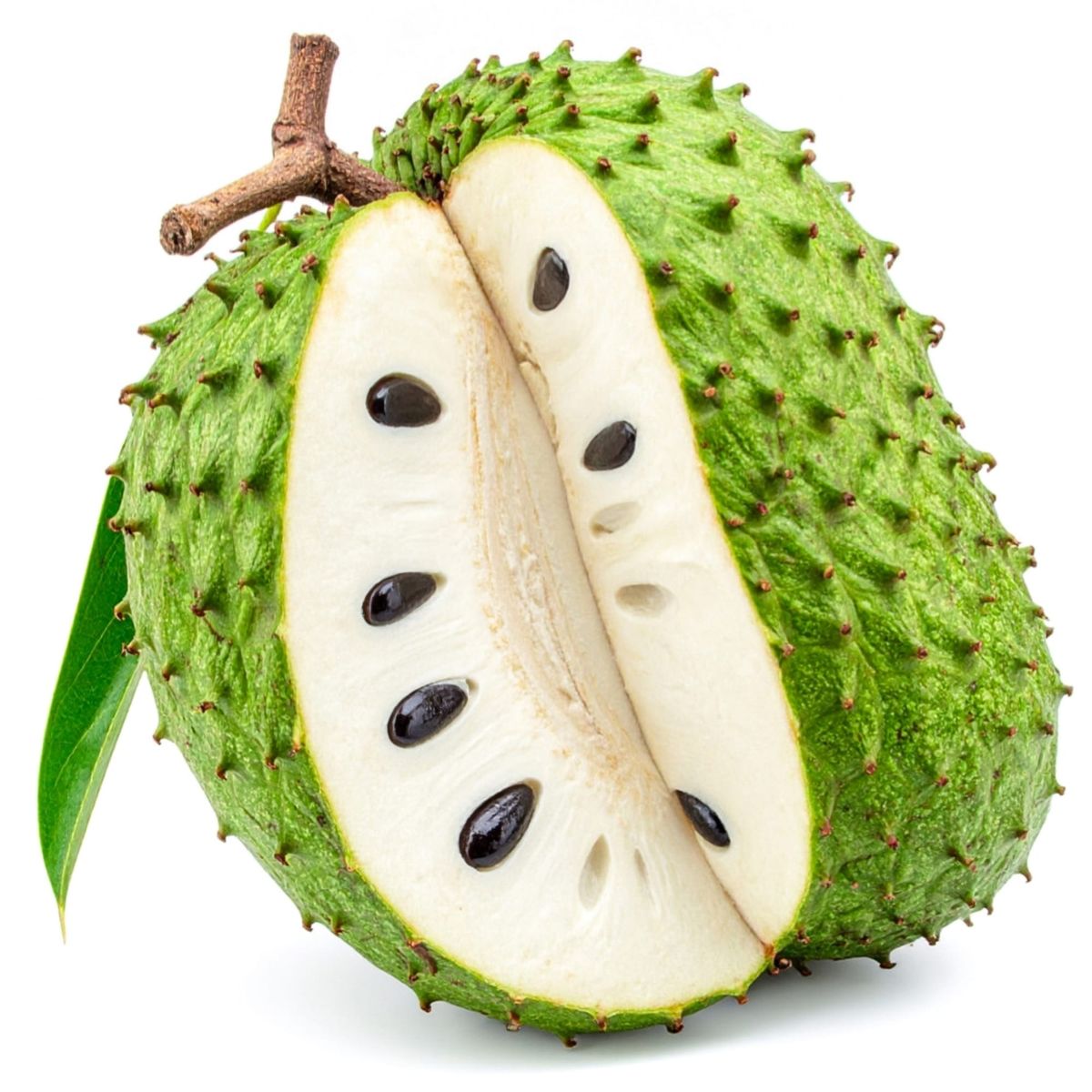
Most soursops are slightly more tropical than custard apple too. A fruit tree native to the warm parts of the Americas. It produces a large green, sometimes yellow fruit covered in soft spines. The outside looks a bit like a spikey football.
Inside you find white creamy flesh with a distinct tropical taste. People often say it tastes like a combination of strawberry and pineapple. Wild soursop have a nice slightly sour aftertaste kick that keeps it refreshing.
The scientific name for soursop is Annona muricata. It belongs to the Annonaceae family which includes custard apples and sugar apples.
It is a broadleaf evergreen tree that stays green all year round. If a tree loses leaves in winter it's a sign the tree needs more protection from the cold. The tree stays relatively small compared to other fruit trees. It usually grows to about 8m high in ideal conditions. And probably 5m in Perth.
Origins
Soursop originated in the tropical regions of Central America and the Caribbean. Local indigenous communities used the fruit leaves and bark for hundreds of years for various things.
Spanish explorers eventually carried the seeds to other tropical locations. It quickly spread through Southeast Asia, Africa and the Pacific islands.
Soursop is gaining global popularity. People around the world are looking for unique tropical flavours. Soursop is iconic and has caught on fast in juices smoothies and ice creams for good reasons.
Scientists are also looking closely at the natural compounds in the leaves and fruit. Its growing reputation as a nutrient packed superfood keeps demand high everywhere. more on this later.
Family
This family that soursop belong too contains 2000+ species. A few are called soursop too or at least have the word soursop in the full name.
Description
Most of them prefer warm tropical climates where frost never touches them. We'll cover the most popular ones later.
While it's a small managable tree, its branch system stays quite compact too which makes it easy to fit into smaller spaces. Under decent conditions a healthy tree can keep producing fruit for over twenty to thirty years.
The leaves are glossy dark green on top and slightly paler underneath. When you crush them in your hand they give off a pungent earthy smell.
The bark is smooth and greyish brown when young but gets darker and slightly rough as the tree matures.
It has a shallow fibrous root system, totally non-invasive. The roots spread out wide near the surface to grab nutrients and water fast.
Hand Pollination Techniques for Maximum Yield
The flowers are strange looking things with thick fleshy petals. They look more like woody buds than typical bright garden flowers.
They hang individually from the trunk or main branches. Botanists call this habit cauliflory. Totally like jaboticaba.
If your tree flowers profusely but drops every single bloom without setting fruit, lack of pollinators is your main issue. You can easily fix this yourself using a small soft paintbrush.
Flowers open in the late afternoon as females, ready to receive pollen. Collect yellow pollen from older male phase flowers early in the morning using a tiny glass vial or brush.
Dab that collected pollen gently onto the sticky centre structure of the fresh female phase flowers in the evening. Hand pollinating like this can boost your fruit set rate tenfold.
Pollination is a bit tricky with these plants. The male and female parts of the flower mature at different times of the day to avoid selfing.
In its native habitat small beetles do most of the heavy lifting for pollination. If you do not have those specific bugs around you might need to try a tiny paintbrush to get decent fruit set.
The fruit itself is a massive compound berry. It forms when dozens of tiny individual ovaries fuse together after successful pollination.
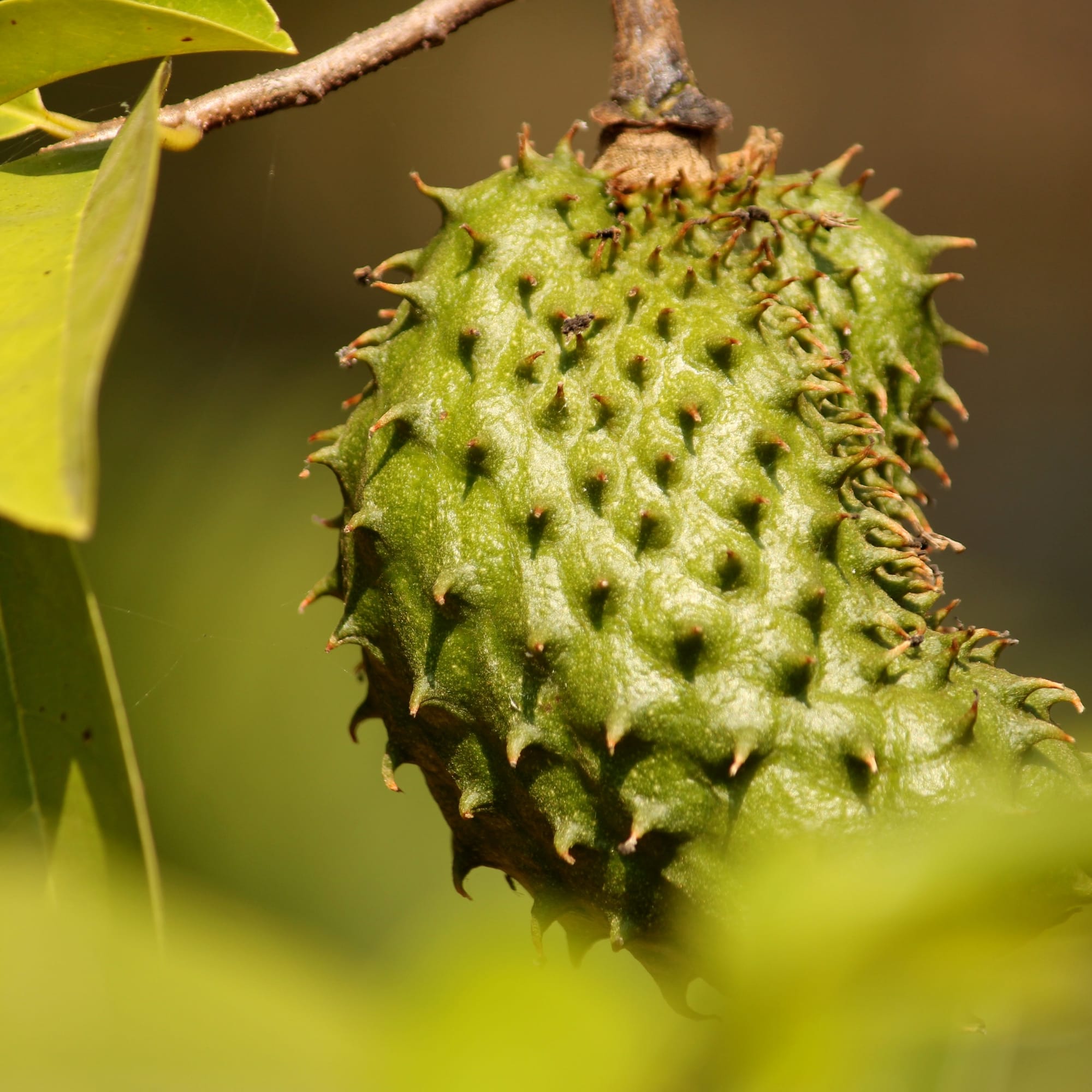
The outer skin is thin normally dark green and covered in soft flexible spines. The spines look intimidating but are harmlessly soft.
Inside sits a soft fibrous white pulp that holds a lot of water... juicy fruit.
Scattered throughout that sweet white flesh are dozens of hard dark brown or black seeds. You definitely want to spit those out because they contain toxic compounds that are no good for you and hold zero medicinal benefit.
What Does Soursop Taste Like?
The flavour is a wild mix of familiar tropical fruits. Apart from the strong notes of pineapple and strawberry mentioned before the flavour is backed by a distinct citrus tang.
Some people even catch subtle hints of banana or coconut in there. It hits the tongue with a sharp, sometimes subtle sour bite that settles into a smooth sweet finish.
The flesh feels soft, mostly fibrous and creamy all at the same time. It has a custard like consistency that holds a stack of juice. See the cultivar list, many improved versions have less to no fibre.
When you open a ripe fruit the smell hits you straight away. It gives off a bright floral aroma with a distinct musky undertone.
Handling a soursop is pretty straightforward once you get the hang of it. You slice the fruit lengthways right down the middle.
Pull out the central fibrous core with your fingers or a knife. Then you simply scoop out the soft white pulp with a spoon while dodging the black seeds.
Traditional juices and smoothies are easily the most popular way to enjoy this fruit across the tropics. The juicy pulp blends up effortlessly into a thick milky drink.
In the Caribbean people often mix the strained juice with condensed milk, nutmeg and a splash of lime. It makes a rich cold drink that knocks the edge off a hot day.
The natural acidity makes it a brilliant candidate for sweet treats like deserts, ice creams, and jams. It balances out heavy sugar levels in ice cream, sorbet and gelatos effortlessly.
You can also simmer the pulp with a bit of sugar to make jam or jelly. The high pectin content helps it set into a thick tangy spread.
Did you know if you pick the fruit green and unripe you can prepare it like a veggie? People rarely think to eat the fruit before it ripens but it works surprisingly well. Unripe soursop has a firm white flesh that tastes a bit like young jackfruit or bamboo shoots.
In places like Indonesia cooks slice up the green fruit and toss it into savoury soups and curries. It absorbs spices like a sponge and adds a unique texture to the dish.
Soursop is of very high nutritional value and carries some good health benefits.
Soursop packs a decent punch when it comes to basic nutrition. The fruit is mostly water which makes it low in calories but very hydrating.
It is loaded with vitamin C which keeps your immune system ticking over nicely. You also get good amounts of dietary fibre potassium magnesium and B vitamins like thiamine and niacin.
Antioxidant properties and immune support is high. The fruit and leaves contain high levels of plant compounds called flavonoids and phytosterols. These act as antioxidants in your body.
Antioxidants help mop up unstable molecules called free radicals before they cause damage to your cells. This helps reduce oxidative stress and keeps your tissues in top shape.
Traditional healers have used soursop preparations to manage joint pain and swelling for generations. Science is starting to show why that actually works.
Lab studies indicate that extracts from the plant inhibit specific inflammatory pathways in animal models. It basically acts like a mild natural anti-inflammatory agent.
The leaves are arguably used more often than the fruit itself in folk medicine. Science is only starting to catch up.
People dry the leaves and steep them in boiling water to make a strong herbal tea.
This tea is commonly taken before bed to promote relaxation and calm nerves. It is also used as a home remedy for mild stomach upsets.
Different cultures use every single part of the tree for various ailments. In South America the leaf juice is applied topically to soothe skin irritations.
In parts of Africa the bark and roots are boiled up to treat fever and respiratory issues. It is a true multipurpose plant in rural communities.
Myth and Science
You will often see internet claims calling soursop a miracle cure for cancer. It is important to look at what the research actually says here.
Certain compounds in the plant called acetogenins have shown an ability to kill cancer cells in laboratory petri dishes and animal studies. That sounds impressive at first glance. However human clinical trials are incomplete. Laboratory results in a test tube do not directly translate to a safe or effective treatment in a human body. Yet many people swear buy soursop leaves.
Safety
Soursop is not without its risks if you overdo it. The plant contains a potent neurotoxin called annonacin.
High concentrations of annonacin are found in the seeds and the leaves with smaller amounts in the fruit pulp. Research links heavy long term consumption of soursop tea to nerve damage that mimics Parkinson's disease symptoms.
Enjoying the fresh fruit occasionally is fine for most people. Just do not go drinking heavy leaf teas every single day or crunching on the seeds.
About 1/3 of a fruit, twice a week (roughly 300g of flesh per portion) is a great simple rule of thumb for a guide to make sure you don't get bad side effects.
How to Grow
Available in Perth: here
Soursop is more than just a sub-tropical plant. It hates cold weather in full exposure until it can self shade at around 3m. It thrives best under shade in a tight micro-climate. (See 3 Easy Fixes to Grow Best in Perth).
It prefers temperatures between 25-30c. A mature tree will drop its leaves if the thermometer dips below 5c at night and frost will outright kill a young specimen.
The tree is not overly fussy about soil types as long as drainage is spot on. Not good in clay and constantly wet soils.
It prefers a slightly acidic soil with a pH between 5.5-6.5.
Adding plenty of organic matter like compost helps sandy soils hold onto nutrients while improving drainage in heavy soils.
Soursop trees love full sun to fuel all that growth and fruit production. However, trees under 1.5m can't handle full sun.
Propagation
Growing from seed is very easy and seeds usually germinate within two to four weeks. However seedlings can take longer to fruit and might not match the quality of the parent tree.
Grafting onto seedling rootstock is the preferred method for commercial growers. It ensures you get top quality fruit and speeds up the time to your first harvest. Grafting may possibly have a dwarfing effect too.
Air layering works well too if you want an exact clone of a high producing tree without the hassle of grafting. Also known as marcotting.
Ground or Pot
Soursops prefer pot culture in Perth, mostly to control pH, nutrients and it's an ideal way to move the tree to a more protected area when needed.
Use a large pot with plenty of drainage holes and a premium free draining potting mix. You will need to prune it regularly to keep the size manageable for pot life.
Seedlings can fruit much quicker in a pot than when left in the ground.
When planting out in the garden pick a spot that gets full sun and is protected from harsh drying winds. Dig a hole twice as wide as the root ball.
Set the plant at the same depth it was in its pot and backfill with what's already there mixed with aged compost. Water it in deeply to settle the soil around the roots.
Young trees need consistent moisture while establishing their root system. Water deeply once or twice a week depending on the weather.
Established trees have moderate drought tolerance but long dry spells will cause fruit drop. Keep the soil evenly moist during flowering and fruiting for the best yields.
Soursop trees are hungry feeders during the warm growing season. Apply a balanced organic fertiliser every few months to keep growth pushing along.
They need plenty of nitrogen for leaf growth and potassium to push fruit development. A sprinkle of trace elements like zinc and iron keeps the foliage looking bright green. Add sulfur too if you suspect your soil and water source is typical Perth alkaline.
Pruning
Pruning helps maintain a good structure and keeps the tree at a manageable picking height. Tip prune the main leader when the tree is young to encourage lower branching.
Remove dead and diseased or crossing branches once a year after harvest. Opening up the canopy allows light and air to penetrate which keeps pests down and helps flowers set.
Bugs and Being Sick
Mealybugs are easily the biggest pain when growing soursop. They look like tiny white cotton balls stuck under the leaves and on the fruit.
Scale insects are another common culprit. They hide under hard brown shells and suck sap out of the stems, making the tree look miserable.
Keep an eye out for ant trails going up the trunk. Ants actually farm mealybugs and scale, so putting a sticky band around the trunk keeps the ants away and lets natural predators do their job.
For small infestations, a spray with horticultural oil or potassium soap works wonders. If fruit flies are active in your area, exclusion bags over the developing fruit are a complete game changer and traps can work well.
Anthracnose is the most common fungal disease you will encounter. It causes black spots on the leaves, flowers, and fruit, often leading to premature fruit drop.
Root rot is another killer caused by overwatering or poor drainage. The roots turn to mush, the leaves turn brown, and the whole tree collapses fast.
Yellow leaves usually mean your tree is suffering from wet feet or a lack of nitrogen. If the lower leaves yellow first, a good feed of nitrogen usually fixes it up.
Fruit drop often happens when the tree gets stressed by dry spells or sudden temperature drops. Cold night winds can cause a tree to dump its whole crop overnight.
Soursop trees benefit hugely from having the right plant neighbours around them. Nitrogen fixing groundcovers or small shrubs like goumi berries help feed the shallow root system naturally.
Planting strong smelling herbs like basil or lemongrass nearby helps confuse pest insects like mealybugs and scale. Flowering groundcovers also pull in native pollinators and beneficial predator bugs that keep pest numbers in check.
Role in Syntropic Agriculture and Food Forests
In tropical agroforestry systems, soursop fills the medium canopy layer perfectly. It likes getting plenty of light while offering light shade to smaller understorey crops underneath like ginger or turmeric.
Because it prunes easily and drops leaves in response to severe stress, it acts as a great organic matter builder when chopped and dropped around the base of surrounding fruit trees.
Soursop is surprisingly resilient against brief dry spells once it establishes a solid root structure. However, extended droughts will cause the tree to drop its fruit to save itself.
It hates salty soils and salty coastal winds with a passion. If you live near the beach, you need to plant it behind a solid windbreak or building to protect the glossy foliage from salt burn.
Picking Fruit
Determining when to pick soursop takes a bit of practice. The fruit turns from a dark green to a lighter yellowish-green when it matures.
The soft spines on the skin also spread further apart and lose their sharp feel. The skin gives slightly under gentle pressure when it is fully ripe and ready to eat.
Do not wait for the fruit to fall off the tree on its own. Falling from height will bruise the soft pulp and could ruin the fruit.
Use a sharp pair of secateurs to snip the fruit stalk cleanly off the branch. Leave a short piece of stem attached to the fruit to prevent fungal rot setting in at the top.
If you harvest the fruit while it is still firm, leave it on the kitchen bench at room temperature. It usually softens up within 3 or 4 days.
You can speed up the process by placing the fruit in a paper bag with an apple or banana. The ethylene gas released by the other fruit triggers rapid softening.
Once a soursop turns soft, you have to act fast because it goes off quickly. A fully ripe fruit only lasts two or three days on the counter before turning brown and sour.
You can pop a ripe fruit into the fridge to buy yourself an extra few days. The skin will turn dark brown in the cold, but the flesh inside stays perfectly fine. Remember the safe level of consumption is around 300 grams.
Freezing is the absolute best way to store a big harvest for later. Scoop out the white flesh, remove all the black seeds, and pack the pulp into airtight bags.
Frozen pulp keeps its brilliant flavour for up to a year in the freezer.
It is super convenient to grab a portion out whenever you want to whip up a smoothie.
While many trees are grown from seed, selection has led to named cultivars with superior traits. Some types are bred specifically for sweet eating, while others are grown for high juice yields.
There are sweet varieties that have lower acid levels and can be eaten straight out of the hand. Acidic selections have a sharper kick and are grown almost exclusively for commercial processing into juice and puree.
Breeding work continues across the globe to cross these wild species with soursop to introduce better cold tolerance and disease resistance.
Soursop is a major commercial crop in places like South America, Mexico, and Southeast Asia. The global market has expanded rapidly as western consumers search for exotic tropical flavours.
Shipping fresh fruit internationally is tough because the ripe fruit is delicate and spoils fast. Because of this, most international trade relies on frozen pulp and processed juices. In Perth a single fruit usually fetches $15-20. Fun fact, by law soursop is not classed as a permitted food due to Food Standard Australia NZ rules. Technically councils and state food authorities are responsible to stop and fine people selling soursop as fruit but they don't.
Commercial processing plants use specialised machinery to strip the skin and extract seeds from the flesh. The resulting smooth puree is pasteurized and packaged for export.
This puree becomes the base ingredient for tropical juice blends, nectar, fruit leather, and dairy desserts sold worldwide.
Beyond food, a massive secondary market exists for wellness products derived from the tree. Dried soursop leaves are packaged and sold globally as herbal tea bags.
Concentrated leaf extracts and powdered capsule supplements are also big sellers online. Consumers buy them seeking the health benefits long associated with traditional preparations.
Related Trees
There's a closely related tree called Mountain Soursop. Unlike common soursop, it is more cold-tolerant, making it a great option for cooler areas in Australia.
Soursop vs. Cherimoya vs. Sugar Apple (Custard Apples)
People confuse soursop with its close relatives all the time. Cherimoya grows better in cooler climates and has smooth skin with a heart shape.
Sugar apple produces smaller round fruit with distinct scaly segments that pull apart easily. Soursop is easily distinguished by its massive size and those soft spiky protrusions all over the skin.
The Annona genus contains over a hundred species scattered across the tropics. Some wild relatives like the pond apple produce poor quality fruit but make tough rootstocks for grafting. Now totally banned in Australia.
Recipes and Home Preparation
How to Make Traditional Soursop Juice
Making a classic batch of soursop juice is dead simple. You start with the soft white pulp from a fully ripe fruit after picking out every single black seed.
Pop the seeded pulp into a blender with a bit of water and pulse it lightly so you do not chop up any stray seed bits. Strain the mixture through a fine mesh sieve or nut milk bag to remove the tough stringy fibres.
Mix the smooth liquid with a splash of fresh lime juice and sweeten it to taste with sugar or honey. Serve it over crushed ice for a seriously refreshing drink.
Creamy Caribbean Soursop Drink
This rich variation is huge across the Caribbean islands and tastes like a liquid tropical dessert. You take your strained soursop juice as the base.
Add half a can of sweetened condensed milk, a dash of evaporated milk, a pinch of ground nutmeg, and a splash of vanilla extract. Stir it down until thick and smooth, then chill it cold before pouring.
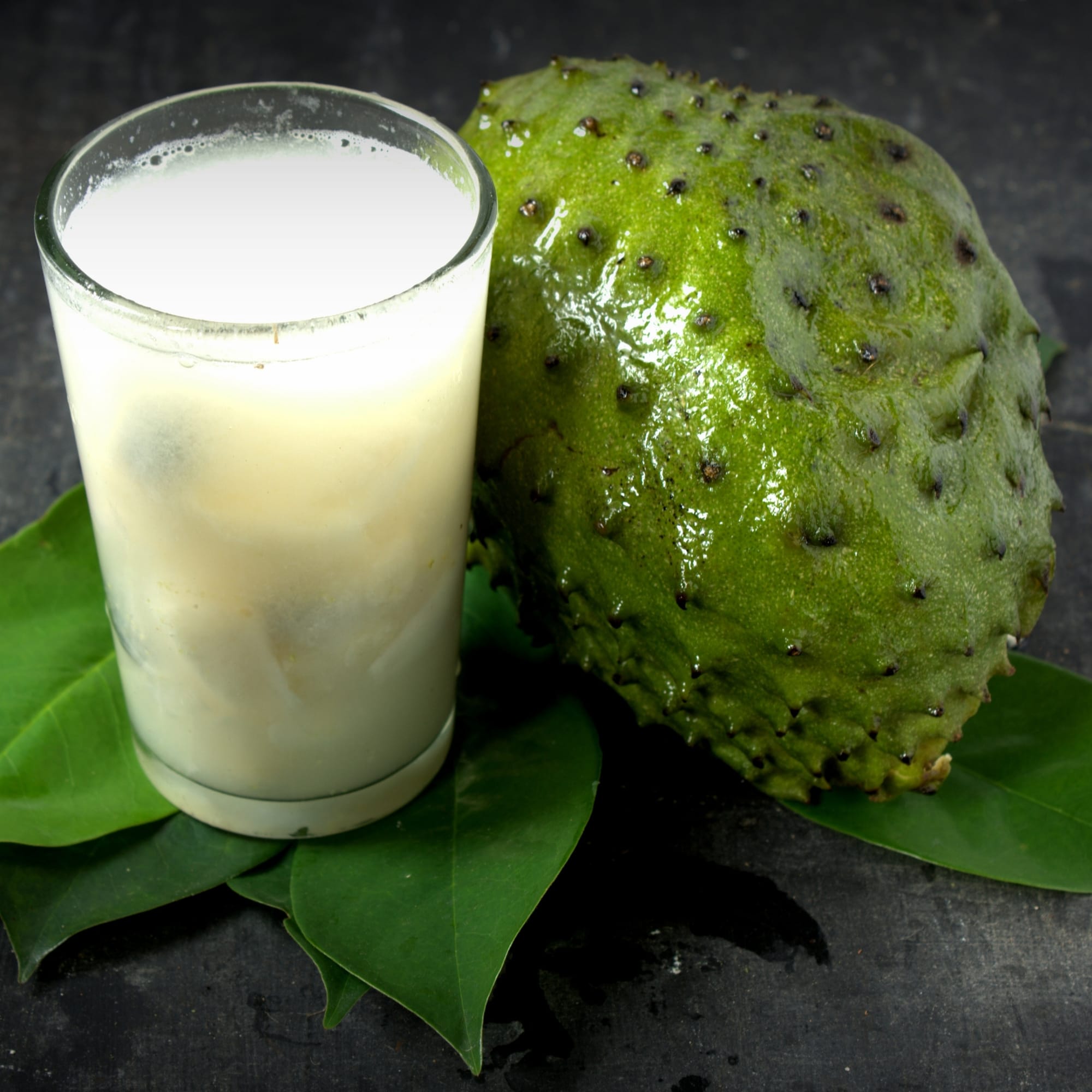
Homemade Soursop Sorbet and Ice Cream
Because soursop pulp is naturally thick and creamy, it makes incredible frozen treats without needing tons of heavy dairy.
For a light sorbet, blend the pulp with a simple sugar syrup and a squeeze of lemon juice, then run it through an ice cream maker. For rich ice cream, fold the pulp directly into a whipped cream and condensed milk base before freezing.
Dehydrating Soursop and Making Fruit Leather
Dehydrating soursop concentrates that sharp sour tropical flavor into an awesome portable snack. You start by puréeing the clean seedless pulp until smooth.
Spread the purée evenly over a non stick dehydrator sheet at about five millimetres thick. Dry it at fifty five degrees Celsius for eight to twelve hours until it peels off cleanly as a flexible sheet.
Roll up the finished fruit leather in parchment paper and keep it in an airtight jar. It keeps brilliantly for months without needing any artificial preservatives.
Pasteurizing Soursop Purée for Long Term Storage
If you have a massive harvest and want to store purée without filling up the freezer, heat pasteurization does the trick. Scoop and seed your fresh pulp, then blend it into a smooth liquid.
Pour the purée into a heavy bottomed pot and heat it gently until it reaches seventy five degrees Celsius. Hold it at that temperature for fifteen minutes while stirring constantly so it does not catch on the bottom.
Pour the hot liquid directly into sterilized glass jars and seal them tight. Heat processing extends the shelf life and makes it shelf stable for your home pantry.
Soursop Leaf Tea Processing and Quality Standards
Commercial soursop leaf tea requires careful post-harvest handling to retain its essential oils and active compounds. Fresh leaves are harvested by hand, washed in clean water, and shade-dried to prevent heat degradation.
Once dry, the leaves are crushed or ground to specific mesh sizes for tea bags or sold whole as premium loose-leaf tea. Proper air-tight packaging is critical to prevent moisture buildup and mold growth during storage.
Soursop Seed Oil Extraction and Cosmetics
The seeds that are discarded during pulp processing contain a high percentage of natural oils. Cold-pressing these seeds yields an oil rich in linoleic and oleic acids.
The cosmetic industry uses this oil as an ingredient in moisturizing soaps, skin creams, and hair conditioners. It absorbs quickly into the skin without leaving a heavy greasy residue.
Commercial Farming Logistics
In commercial orchards, trees are typically spaced about four to six metres apart in rows. This spacing gives each canopy enough room to spread while allowing easy access for picking teams.
A mature healthy tree can produce anywhere from twenty to 50 kgs of fruit per year. High yielding commercial cultivars with hand pollination can push those numbers even higher.
Frequently Asked Questions
Is soursop safe to eat every day?
Eating the fresh fruit occasionally as part of a balanced diet is fine for most people. However, eating massive amounts daily or drinking heavy leaf teas is not recommended due to the nerve-damaging compounds in the plant. 300 grams twice a week seems safe.
Can you eat soursop seeds?
No, you should never eat the seeds. Soursop seeds are hard, indigestible, and contain high levels of toxic neurotoxins that can cause severe stomach upset.
How long does it take for a soursop tree to bear fruit?
A tree grown from seed usually takes 5-7 years in a pot to produce its first crop. Maybe 10 years in the ground. If you plant a grafted or air-layered tree, you can expect fruit much faster, often within 1-2 years.
Can soursop grow in cold climates?
Soursop cannot survive frost or prolonged cold weather in the ground. If you live in a cooler region, you must grow it in a large container and move it into a warm greenhouse or indoors over winter. Perth is fine in the right micro-climate.