What's a Native Tree?
How long has this tree actually been here? It is a fair question, and the answer matters more than you might think.
For a lot of official rules and regulations, a tree only gets called "native" if it was already growing here before humans started mucking about with global travel. That cutoff date is usually pegged to before European settlers arrived in Australia, or sometimes even earlier, back to before "the West" went to new lands like when Columbus set sail. The logic is simple. If a plant was here before we started shipping stuff around the world, it earned its spot naturally. Is it that simple?
So how do scientists actually prove a tree has been here for thousands of years? They dig. Ancient pollen grains and fossilised leaves get trapped in layers of mud and sediment, and by dating those layers, researchers can tell exactly when a particular species showed up in a region. If the pollen appears in layers that are a few thousand years old, that tree is definately a local. If it only shows up in the top layer from the last hundred years, it is a newcomer.
There is also the natural speed limit to consider. Before humans came along, a tree could only spread as fast as the wind or animals could carry its seeds. That took forever, we are talking thousands of years to move a few hundred kilometres. If a tree suddenly appeared right after a port was built or a settlement was established, it almost certainly hitched a ride with people.
That brings us to what you might call the baggage test. Native trees did not need humans to carry their seeds. They earned their place through pure nature, by evolving alongside local soils, climate, and wildlife, not by sneaking aboard a ship from another continent. If it had to be planted by a settler or arrived as a stowaway in a cargo hold, it is not native. Full stop.
For us here in Perth Metro, this matters when you are choosing actively to plant purely natives in your backyard. A true native has spent millennia adapting to our sandy soils, our baking summer heat, and our sporadic winter rains. It already knows how to handle the local conditions without babysitting. That is a pretty good reason to give it a spot in the garden.
How did it actually get here? That is the second big question, and the answer usually falls into one of a few categories. Bird delivery is the classic one. You have a native bird that eats some fruit, flies around, and eventually drops the seeds somewhere else in its droppings. If those seeds germinate and grow, that is a perfectly natural arrival. The bird did the work, no human help required. It is the oldest delivery system in the book, and it works incredibly well. Then there is ocean drift. Some seeds can survive for months floating in salty seawater. They wash up on beaches, get pushed into the dunes, and sprout. If a plant arrived that way, it earns native status because nature carried it here all on its own. No boats involved. Wind power is another one. Tiny, light seeds get picked up by storms and blown across vast distances. They might travel hundreds of kilometres before landing. That counts as a natural arrival because the weather did the heavy lifting. Now for the human route. Human interference. If a gardener, farmer, or timber company planted it on purpose, it is not native. End of story. The same goes for seeds that snuck in on shipping crates, in soil from another country, or stuck to the bottom of a boot. If a human carried it, deliberately or accidentally, it does not get the native badge. Then there is what scientists call the mystery zone. Sometimes the evidence is just too blurry. A plant shows up in a region, and researchers genuinely cannot tell if a bird dropped it or a human did. These are known as cryptic species. We simply do not know for sure how they got there, and the evidence is not clear enough to settle the debate. Cedar bay cherry could be one example, it's strange there's a Eugenia native to the Kimberleys. If a plant relied on birds, wind, or ocean currents to get here, it has a good chance of fitting into the local ecosystem without becoming a an invasive problem. If it arrived on a truck or a ship, you might want to think twice before giving it a spot in your backyard.
Did it evolve and change right here? This is where things get really interesting. The key question is whether this tree species actually evolved into its current form in this specific region, or whether it just moved in from somewhere else and happened to survive. Big difference. A plant that evolved here has been shaped by local soils, local climate, and local pests for thousands or even millions of years. It is finely tuned to this place in a way that a recent arrival simply cannot match. Then you have the ice age survivors. Some trees are what scientists call relicts. That means they stuck around in local pockets even when the climate went completely haywire during ice ages and major dry spells. Think wollemi pine. While other species died out or retreated north, these tough buggers hung on in protected gullies or along permanent water sources. They are the old-timers, the true survivors, and they get top marks on the native scale. The genetic evidence is the real clincher. If the trees in your area have a specific family recipe of DNA that you cannot find anywhere else on Earth, that proves they have been adapting here for a crazy long time. They are not just the same species as ones growing in Queensland or New Zealand. They are their own unique local population with their own genetic quirks. That is the gold standard for native status.
A plant that evolved here, survived the ice ages, and has its own unique DNA is about as local as you can get. It belongs in your backyard.
How has it adapted to the local drama? This is where you see the real survival skills in action.
Timing is everything for a native tree. They know exactly when to burst into flower and when to drop their seeds based on the local weather patterns and the length of daylight. They do not get confused by a random warm spell in the middle of winter. They have an internal calendar that is tuned to this specific place, and they stick to it no matter what the weather throws at them.
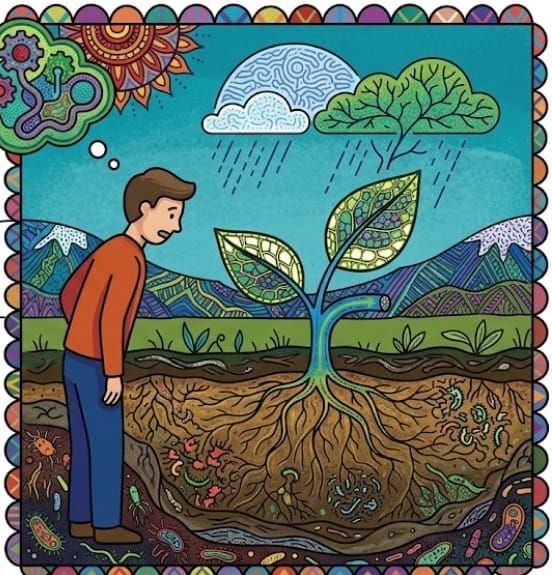
Then you have the soil besties. Native trees have built deep friendships with local fungi and bacteria that live in the dirt. These microscopic roommates help them pull nutrients and water from the soil, and in return, the tree feeds them with sugars from its roots. It is a proper partnership, and it works so well that the tree literally cannot grow properly without these specific local helpers. If you dig up a native tree and move it to a different spot, it might struggle because it has lost its underground support network.
They are also built for the weather. A true native handles local frosts, heatwaves, and droughts like a champ because its body is literally wired for those exact conditions. The leaves, the bark, the root system, all of it has been shaped over generations to cope with the specific challenges of this region. That is why they thrive with so little fuss compared to a fancy exotic plant that needs constant babying.
Here is a neat one. Even trees of the same species can look different depending on where they are growing. If your area is dry, they grow thicker, waxier leaves to hold onto moisture. If it is wet, they grow big floppy ones to soak up all that rain and sunlight. This is not just random variation, it is a sign that the tree has been working with the local weather forever and has fine-tuned its appearance to suit the conditions.
For Perth gardeners, this is the payoff. A truly native plant already knows how to handle our baking summers, our sandy soils, and our unreliable winter rains. It does not need extra water, fancy fertilisers, or constant coddling. It has been doing this for millennia, and it is happy to keep doing it in your backyard without any drama.
Does it actually matter to the local neighbours? This is the big one, and the answer is yes, it matters a lot. Think of a native tree as an apartment building. It provides housing and food for local bugs, birds, and critters that have evolved alongside it. If a tree is truly native, the local caterpillars actually want to eat its leaves. They recognise it as food because their ancestors have been munching on it for generations. That is a huge deal. If you plant a foreign tree, those same caterpillars will often walk right past it because they do not know what to do with it. Then you have the food chain connection. Sometimes a local bird only eats the berries from one specific tree, and that tree only grows in one specific region. If that tree disappears, the bird is in serious trouble. That is why these relationships matter. They are not optional, they are the backbone of the whole ecosystem. The recycling side of things is easy to overlook but just as important. Native leaves fall to the ground and break down at exactly the right speed to feed the local soil and smaller plants. They do not clog up the system or create a thick, impenetrable layer that smothers everything else. They are part of a natural cycle that has been running smoothly for thousands of years. Even some natives can be a bit of a jerk. A few species grow too fast and shade out smaller plants nearby, or they spread aggressively and take over. We call them native invaders, and they can be a problem in gardens. But here is the difference. They are not as bad as foreign ones. A native bully still has local predators, local diseases, and local competition that keep it somewhat in check. A foreign bully often has none of those, so it runs riot with no brakes at all.
Why do some families have like a thousand different species? It is a fair question, and the answer comes down to a few key drivers. Changing soil types is a big one. If a forest has patchy soil, some rocky, some sandy, some swampy, one type of tree might split into several different species just to survive on each patch. Over time, the ones on rocky ground develop deeper roots, the ones on sandy soil get better at holding moisture, and the ones in the swamp learn to cope with waterlogged feet. Eventually they stop breeding with each other and become completely different trees. Different delivery guys also play a role. If flowers evolve to attract different types of bees or birds, they stop mating with each other. A flower that only opens at night for moths will not cross with one that opens during the day for bees. Given enough time, those two groups become new, totally separate species. It is all about who is doing the delivering. Some tree groups are just naturally flexible and constantly cross-breed with their cousins. This creates tons of weird new varieties faster than normal. Think of it like a big family reunion where everyone is swapping genes and coming up with odd new combinations. It keeps things interesting. Then you have the genetic glitch known as polyploidy. Sometimes a tree accidentally duplicates its entire DNA set. This is not a small change. It is like copying the whole instruction manual twice over. The tree is suddenly unable to breed with its parents or siblings because the chromosome numbers do not match. That instantly creates a brand new species on the spot. It happens more often than you might think. The Amazon and it's surrounding areas is a perfect region to study this in depth. Island life is another one. When a tree gets to a remote island with no competition, it goes wild. There is empty real estate everywhere, so it adapts to fill every available space. One species might split into several just to survive in different parts of the island, from the windy coast to the sheltered valley. It is evolution on fast forward.
What happens when they have babies with strangers? That is hybridisation, and it gets complicated fast. Native trees often cross-breed with closely related species if they grow nearby. This is cousin dating, basically. The resulting hybrids are a mix of both parents, and sometimes they are perfectly healthy and fertile. Other times they are not. The real problem is when a native tree breeds with a foreign, non-native tree. If those hybrid babies breed back with the pure native tree, it slowly dilutes the native's DNA. This is called genetic swamping, and it can wipe out the pure native version entirely. The local tree does not disappear overnight, but over generations, its unique genetic recipe gets watered down until it is barely recognisable. This raises a tricky question. If a native tree has a baby with a tree from another country, is that baby native or not? Conservationists argue about this all the time. Some say any hybrid is not native because it contains foreign DNA. Others argue that natural hybridisation happens all the time in the wild, so why draw a hard line? There is no easy answer. The health of the hybrid matters too. Sometimes hybrids are super strong and vigorous, even outperforming their pure parents. Other times they are weak and cannot produce viable seeds. Scientists look at whether the baby is fertile to decide if it is a real new type or just a dead-end experiment. If it cannot reproduce, it is basically a genetic cul-de-sac with no future. If you are collecting rare or unusual trees. You might end up with a hybrid without even realising it. And if you are trying to preserve a genuine local native, you want to avoid cross-breeding with anything foreign that could muddy the gene pool. It is another layer of complexity, but it is also what makes this whole plant nerd hobby so fascinating.
Other major factors scientists look at go beyond just the tree itself.
Historical records are a goldmine. Old journals from explorers, early settlers, and Indigenous peoples often mention what trees were growing in an area before anyone started building farms or towns. If a written record from 1820 says a certain tree was common along a river, you have pretty solid evidence that it belongs there.
Museum specimens are another piece of the puzzle. Botanists have been pressing, drying, and collecting leaves and branches for centuries. These preserved samples are stored in herbaria around the world. If a tree was collected from your area 100 or 150 years ago, it was definitely there.
Then you have buried seed banks. Sometimes seeds stay alive in the ground for decades or even longer, waiting for the right conditions to sprout. Scientists dig up soil samples from different depths and try to germinate whatever seeds they find. If they pull up viable seeds from layers that are centuries old, it proves that tree has been a long-term resident of that spot.
Fire history is a big one, especially here in Australia. Scientists look at tree rings and charcoal layers in the soil to work out how often an area has burned. If a tree depends on occasional forest fires to release its seeds, and those fires have been happening naturally for centuries, that tree is definitely native. It has evolved to rely on fire, and fire has evolved alongside it.
Now for the curveball. Climate change. As the planet warms, trees start moving. They creep further south or climb higher up mountains to find cooler conditions. Introduced ones become naturalised. If a tree moves into a new area because of climate change, is it native to that new spot? That is a big debate happening right now in conservation circles. Some say yes, it is just nature doing its thing. Others say no, because human-caused warming is not natural, so the movement is not natural either. There is no clear answer yet, and it is causing plenty of headaches for land managers and policymakers. The more you know about a tree's history, how it got here, how it has adapted, and whether it fits into the local ecosystem, the better choice you can make. It is not always straightforward, but that is what makes it interesting.
A famous example is the Indian tamarind tree. A tree that got here long before the First Fleet even left England. The Indian tamarind, or Tamarindus indica, is one of those plants that challenges everything you think you know about what belongs in Australia.
Here is the thing. This tree is not native. But it has been here for so long that some early botanists actually thought it was. That confusion is understandable when you realise it was already growing along our northern coasts when European settlers first showed up. The real story of how it got here is far more interesting than a simple case of mistaken identity.
The tamarind actually originated in tropical Africa. From there, it hitched a ride along ancient sea trade routes and made its way to South Asia and Southeast Asia. But its journey did not stop there. The real chapter that matters for us starts in the late 1600s, when Macassan traders from Sulawesi started sailing down to Australia's northern coast.
These traders were not coming for the scenery. They were after trepang, a sea cucumber that the Chinese valued highly as a food and medicine. They followed the monsoon winds across the Timor Sea, set up seasonal camps along the coast, and worked with local Aboriginal people to harvest and process the trepang. At times, there were as many as 2000 Macassan traders scattered along the Cobourg Peninsula and the Gulf of Carpentaria. That is a lot of people, and they brought a lot of stuff with them.
Among the things they brought were tamarind seeds and seedlings. They planted them for a few very practical reasons. The fruit was a great source of vitamin C, which helped prevent scurvy on their long voyages. The trees also served as navigational markers along the coast, and as provisions for future trips. Imagine rocking up to a familiar spot after a year away and finding a tree full of food waiting for you. That is smart planning.
The Macassans also introduced mango trees for the same reasons. These fruits are sometimes considered the very first international influences in Australian cuisine. Not bad for a bunch of fishermen.
Over time, the tamarind spread. The trees took hold along the northern coastline, from Western Australia across the Top End and into Queensland. The relationship between the Macassans and the local Aboriginal people was largely harmonious. They traded goods like metal knives, cloth, tobacco, and rice. Some Aboriginal people even travelled back to Macassar. And those tamarind trees, along with Macassan words and place names, are still there as a living reminder of that shared history.
The tamarind trade with the Macassans continued until the early 1900s, when Australia passed laws to protect the local trepang industry. But the trees stayed.
Today, the tamarind is naturalised across northern Australia. It is drought-resistant and handles sandy soils near the coast, but it is adaptable enough to grow in a range of conditions. It produces those long brown pods filled with a sticky, tangy pulp that is used in all sorts of cooking, from curries to chutneys to that classic tamarind toffee. The pulp has a laxative effect, and Aboriginal people have used it for coughs, colds, and diarrhoea.
The tree itself is a beauty. It can grow up to 25m tall with a broad, dense crown and rough grey bark. The feathery light green foliage is enhanced by small red and white flowers that smell sweet and attract bees by the swarm. It fruits from August to October, and you will often find the ground beneath them littered with fallen pods.
So, is the Indian tamarind native? No. The official line is that it was introduced by Macassan traders in the early 1700s, and that is the story that sticks. But it has been here for over 300 years. It has woven itself into the landscape and into the history of this country in a way that few other introduced plants have. It is a reminder that Australia was never as isolated as we sometimes think. People have been coming here, trading, and planting things for a very long time. And sometimes, those trees outlast the traders who brought them.